
Apple juice concentrate is a lot more than a sweet liquid; it is an ingredient used in beverages, desserts, and food products around the world. Have you ever wondered about the journey of fresh apples to a thick, shelf-stable juice concentrate? The production of apple juice concentrate includes many steps: proper apple selection, processing, extracting, clarifying, concentrating, and packaging the juice in a sterile setting.
The value of this knowledge helps manufacturers, in some cases, improve process efficiencies; it also gives consumers knowledge about some of the quality and safety measures that go into their favourite apple products. In this article, we will follow every step of the production line, revenue opportunities, and valuable information to consider in the production of apple juice concentrate.
Step 1: Apple Reception, Washing, and Sorting
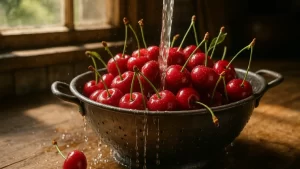
Upon arrival at the processing facility, the first point of order is to ensure that, before proceeding any further, the fresh apples are safe and clean for processing. Each apple is processed through a washing system that removes dirt, pesticides, and any other remnants.
The first step is important because we know that the final product, in this case, the apple juice concentrate, is only as good as the freshest apples that we have received. Apples are then sorted and only apples free of bruises, rot, or any other defects can be processed.
Sorting the apples is also important as we need to deliver a consistent taste, color and clarity of apple juice. This is paramount to delivering a quality apple juice concentrate.
Let’s say you want to learn more about the product from this production line. You can read our article on what is apple juice concentrate and get a better understanding of how washed and sorted apples become the thick and sweet concentrate that goes into beverages, and food products the world over.
Step 2: Crushing and Juice Extraction
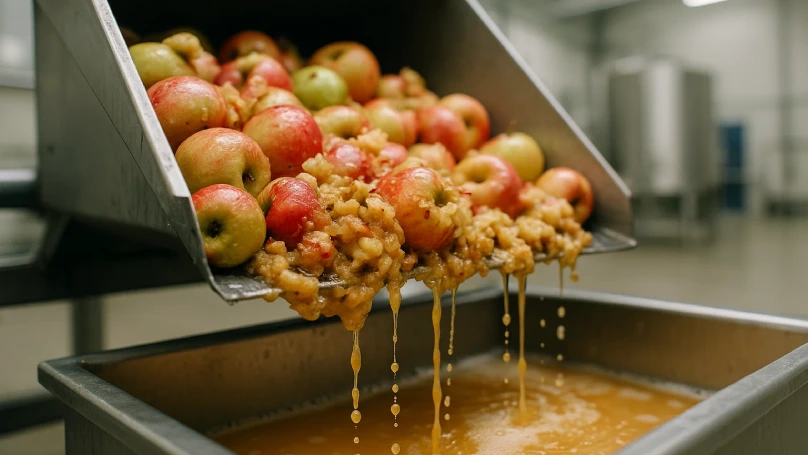
Once the sorting process is complete, the apples are cut into smaller pieces and sent to an industrial crusher. Crushing breaks up the pulp of the fruit, allowing for good extraction of the juice. After crushing, industrial presses are used to separate the juice from the solid material, such as peel, seeds, and core. To obtain a better juice yield and to clarify the juice, enzymes, often pectinase, are added to the apple mash.
These enzymes work to break down long molecules of pectin so that if more juice can flow and reduce the cloudiness of juice. This is important, as the quality and taste of the finished apple juice concentrate rely heavily on good extraction techniques. Good crushing and pressing of apples will yield apple juice with a rich mouth-feel and a very strong natural apple flavor.
Step 3: Filtration and Clarification
Clarification is a key consideration for juicing products if the goal is to sell juices. The extraction process yields juice, but juice contains pulp, fine particles, and suspended solids, which give it a cloudy appearance. Juice processing facilities apply the processes of filtration and clarification to remove pulp and contaminants and get clear juice that presents better on the shelf.
Common techniques producers will use for the removal of solids from the liquid phase include membrane filter, disk separators, and belt presses.
With proper filtration, juices that achieve clarification are ready for pasteurization and concentration. Clear juice produces higher-quality apple juice concentrate with fruits matching the flavor and aroma consumers desire.
Step 4: Pasteurization
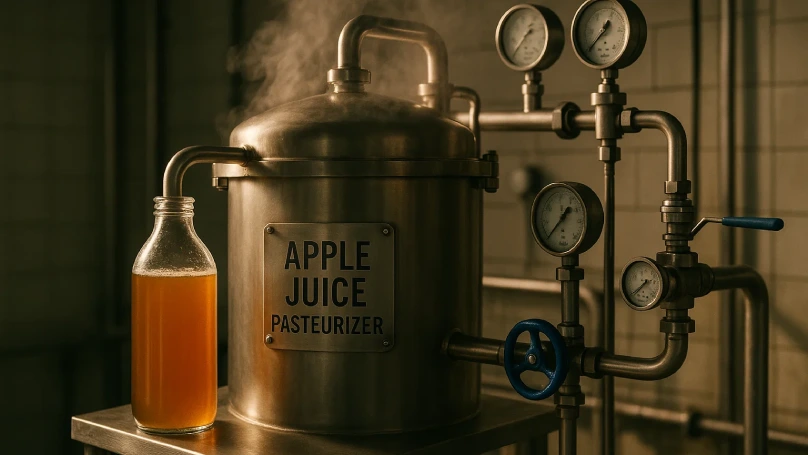
To clarify, apple juice is pasteurized to minimize the risk of hazards and to extend shelf life. Pasteurization is the process of heating the juice to a high temperature for a short time period. This deactivates enzymes and kills microbial pathogens, and slows down the spoilage of juice. Even with the highest quality juice, spoilage should be avoided as much as possible, even just for safety reasons, if microbes are still present.
The pasteurization process is done and monitored so the natural apple flavor, aroma, and color of the juice is retained as much as possible while keeping a safe shelf life. Pasteurization creates a stable product in which the juice is safe enough to go on to the next step: concentration. When combining safety and quality, we have provided some assurance that we can produce a good juice concentrate that people can enjoy.
Step 5: Concentration Process
During the concentration stage, industrial evaporators are used to remove some of the water found in the pasteurized juice, which will lower the volume and increase sugar composition, for example, concentrated sweet apple juice, and the concentrate consists of a creamy, thick paste of sugar. The benefits of water removal include easier storage and transportation methods, as well as increased shelf life of the juice and concentrate since evaporation occurs at a low temperature.
The process is controlled to ensure that the juice does not get overheated to help preserve the natural flavor and color of the juice. The concentration process helps convert the juice into its finished form for manufacturers, helping make it easier to ship in bulk amounts or use as an ingredient in beverages, desserts, or other food products around the globe.
Step 6: Sterilization and Aseptic Filling
Sterilization follows concentration and serves to kill any microorganisms found in the juice. A critical step in the processing, sterilization of apple concentrate ensures that the juice is safe and stable for long-term storage.
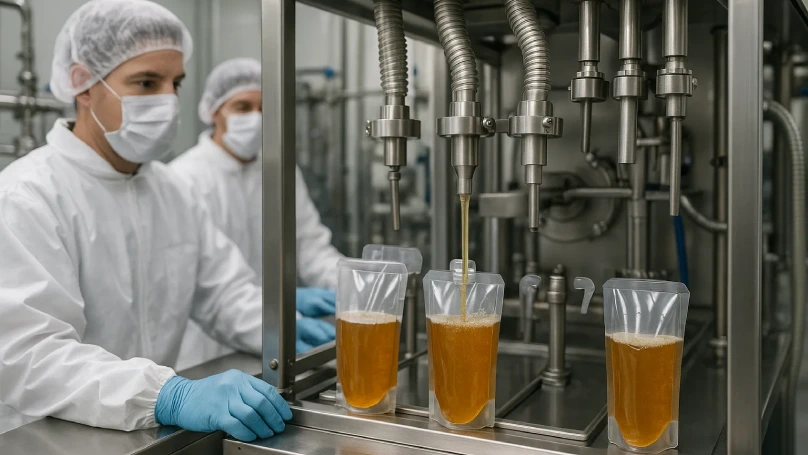
At this point of processing, sterilization is finished and takes place by filling the concentrate in sterile containers using systems of aseptic filling technology, which may be used in singular or a combination of sterile filling or sterile liquid. The aseptic fill preserves the product in a totally hygienic state, which always creates a zero chance of risk of recontamination.
Step 7: Packaging
The finished item will be contained in cartons, drums, or flexible pouches and this packaging will protect the concentrate from air, light, or contamination, all of which can shorten shelf life. It is important to package properly to prolong the time in which the concentrate is in its best quality state before reaching manufacturers or consumers.
Conclusion
Producing apple juice concentrate is a complex multi-step operation that begins with high-quality apples and finishes with a sterile, commercially viable product for the marketplace. Each step, washing/sorting, crushing/extraction, filtration, pasteurization, concentration, and aseptic filling, ensures that the final concentrate will keep the natural flavour, aroma, and nutritional value of the pre-concentrate form of the product.
Understanding this production line can assist producers in reducing or optimizing inefficiencies, improving consistent product quality as well as providing consumer confidence in the product that they enjoy. For those interested in using the concentrate residentially or in cooking, please visit our full article on the apple cider concentrate recipe that describes how this versatile food product can become many different types of beverages and culinary dishes.
The perfectly engineered precision of the industrial process, combined with the cooking possibilities of apple juice concentrate, makes the product a pretty special item.apple cider concentrate recipe