
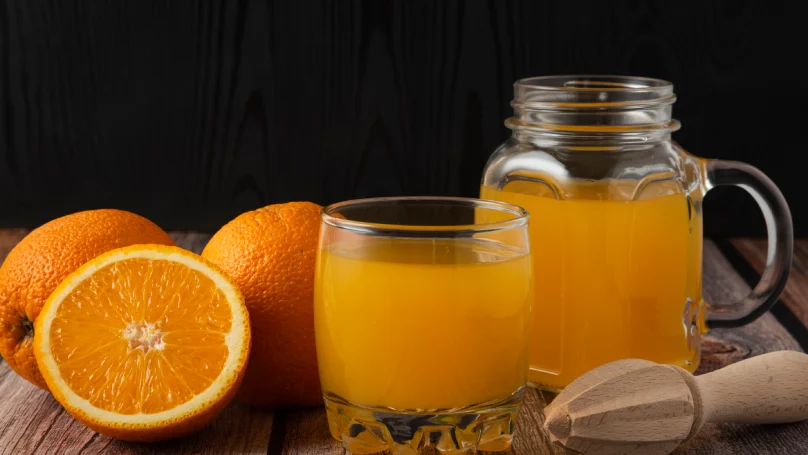
Have you ever thought about how to create orange juice concentrate from fresh oranges? For example, you may want to save some bucks by reducing waste or enjoy only the purest taste. Making your concentrate happens to be quite worth it. Store-bought varieties just pack so many preservatives. Make your preparations using this guide picking the best oranges to store the final product so that you eventually have some well-extracted, natural delicious concentrate that is perfect for any occasion. Well, ready to squeeze some sunshine into your kitchen with oranges? Let’s get started!
Tarazfoods is a trusted wholesale fruit juice concentrate supplier, offering an extensive range of premium products, including natural fruit juice concentrates, high-quality purées, and export-grade beverages. With a strong focus on quality control and adherence to international standards, Tarazfoods has become the preferred partner for global buyers seeking reliable, consistent, and certified fruit-based solutions from Iran.
Why Make Orange Juice Concentrate at Home?
But aside from being a fun activity in the kitchen, making orange juice concentrate is one of the most practical things you can do. And here’s why:
Pros of homemade concentrate: No fiber and no additives or preservatives, because that’s what you get with homemade concentrate compared to store-bought. Concentrate made by yourself can’t be compared to anything else because it perfectly complements the taste of oranges.
Affordable and natural taste: Fresh oranges are cheaper than packaged concentrate, and the taste? It’s up to you! Fruit juices have more to do with the hidden sugars and artificial flavors of manufactured ingredients, and it depends on what ingredients you use.

Ingredients and Tools You’ll Need
Get your ingredients and equipment ready before you set off:
Ingredients:
- Fresh, ripened oranges (organic would be best; nothing compares to the taste!)
- Optional: a little pinch of sugar or perhaps a squirt of lemon juice to balance the flavors
Equipment:
- Juicer or citrus press
- Big saucepan
- Fine mesh strainer or cheesecloth
- Air-proof storage containers
Peeling and De-seeding
Obtaining the oranges is just the first step. Then the fruits will have to be peeled. Carefully peel it so that the pulp can be accessed completely. And remember to de-seed the oranges so that none of the bitter flavor permeates into the concentrate. But if you use a seedless kind of orange such as navel oranges, that process will just take a couple of minutes.
Blending the Oranges
And now you are left with all the peels and de-seeded oranges, which are ready to be blended. You can either use a blender or a food processor, depending on what is available for use. While blending, you aim to get a smooth pulpy consistency without having chunks of orange left in it. This process will tear the segments and squeeze their juices to form the starting point of your concentrate.
Straining the Pulp
After blending, you have to strain the orange mixture to get fine pulp and fibers. A fine sieve or a cheesecloth should be used here to strain the liquid juice and make sure that it is as much juice-extracting as possible. To make the clear juice easier to boil down and reduce to a concentrate.
Boiling the Juice
Then pour this juice into a pan, and you should ideally use a nonstick or heavy-bottomed pan to prohibit the juice from burning or sticking. Follow this by directly lighting to start heating the pan contents to medium-high. This is where you begin the process of reduction.
Keep watching it while the juice starts to heat since it needs to be stirred frequently to prevent it from burning to the bottom. All of this is done in hopes of evaporating enough water from the juice that it will become concentrated. Usually, this process requires at least five or six minutes.
During the simmering process, the juice will begin bubbling and then tend to diminish in volume. At this time please don’t add any sugar or other infusions; the sugars in the oranges will be enough for a nice, fresh, sweet concentrate.
Finally, when you reach the right thick consistency, remove from heat and let the concentrate cool.
Storing the Concentrate
Once it has cooled slightly, pour the concentrate into a small ceramic or glass bowl. A container should be used that will withstand both the warm temperature of the concentrate now, as well as cold refrigeration later.
Allow the concentrate to cool down to room temperature. Once it’s not warm anymore, refrigerate the container. Let it be in the refrigerator for at least an hour or two, as this can give the concentrate additional time to cool down and thicken even further to your preference.
Conclusion
Making orange juice concentrate at home is quite easy, rewarding, and healthier than buying from the store. In just a matter of a few tools and fresh oranges, one can enjoy a versatile-preservative concentrate as lively and flavor-packed an ingredient as they come: from mixing drinks to sprucing up recipes and even just downing a glass of it for itself, this concentrate brightens someone’s day.
For anyone wanting to stay in some other ways of preparing orange juice, our article about How to make orange juice from frozen concentrate will serve you very well. Another handy guide when fresh oranges are a tad sparse.


