

Ever wondered how pomegranate juice becomes a deep‑flavor concentrated syrup that keeps for months? You’re not weird—it’s curious, right? Pomegranate seeds mimic ruby jewels and the juice turned into concentrate holds powerful flavor and nutrition. In this article, I walk you through clear, simple facts about pomegranate juice concentrate recipes. I’ll cover how to choose fruit, extract juice, simmer it into a concentrate, store it safely, and use it in drinks, sauces, or desserts. You’ll also see what the global concentrate market looks like in real numbers.
What Is Pomegranate Juice Concentrate?
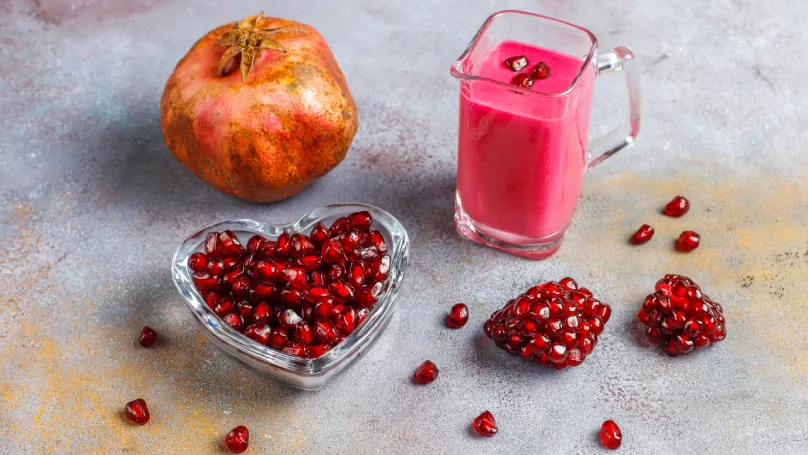
Pomegranate juice concentrate is as it sounds! Pomegranate juice that has had all or most of its water evaporated. Not nectar, not syrup with sugar added – only juice that has been reduced until thick. The idea is to concentrate flavor, color, and shelf life. Think of effectually boiling off the mist to leave a very berry‑red concoction.
Some commercial juice concentrate processing begins with the juice being extracted with industrial juicing machines, then pasteurized, followed by spray-drying or reverse osmosis, depending on whether one wants a liquid concentrate or a powdered.
Home concentrate is the liquid form. The juice is simmered until the volume is reduced by about 50–60%. The polyphenols (antioxidants) and vitamin C levels are preserved as much as possible, as heat-sensitive compounds will dissipate without compromising the nutritional quality of the juice. Pomegranate juice concentrates pack a ton of tartness and sweetness into a tiny jar compared to using fresh juice. It is more than likely that 1 cup of the concentrate contains a flavour and nutrition equal to 4 cups of fresh juice.
Why Make Your Own Concentrate at Home?
You gain total control when you make your pomegranate concentrate—no added sugar, no preservatives, and no dilution with cheaper juices. Commercial concentrates may proudly say “100% juice,” but some add water or sugar to resemble natural sweetness. Home concentrate guarantees purity and transparency.
Homemade concentrate delivers richer antioxidants and more vivid flavor than diluted store versions; it’s essentially a smaller, more powerful form of the fruit’s goodness. Plus, when pomegranates are in season, it cost far less per ounce than ready-made versions. Many people who try it say the taste is noticeably deeper, bolder.
Need more reasons and step‑by‑step motivation? Check out our other article titled how to make fruit concentrate at home for expanded insights and practical tips.
Revenue Streams of the Pomegranate Juice Concentrate
Numerous small food businesses, likely like yours, began with simply creating and sharing our amazing recipe. There is a large market for artisanal, quality and local food products, with consumers tiring of throwaway mass-produced products and actively seeking to buy products that have a story; with a real living person behind them.
Your homemade pomegranate concentrate is an excellent example of this. It is unique and versatile, and it has perceived value as being both a healthy product and a gourmet. Before you simply dismiss the idea, consider the possibilities. You are not simply selling a “syrup”. You are selling an essential ingredient for chefs, an insider secret ingredient for craft cocktail bartenders, an easy drizzle for healthy morning yogurt bowls, and an adventurous flavour for enthusiastic bakers.
| Revenue Stream | General Explanation |
| Pure Concentrate Sales | Selling the unadulterated, pure pomegranate concentrate in various bottle sizes. This is the foundational product. |
| Artisanal Syrups & Mixers | Creating flavored variations by infusing the concentrate with spices (cinnamon, star anise), herbs (rosemary, mint), or other fruits (citrus). |
| Pomegranate-Infused Baked Goods | Using the concentrate as a key flavor in products like glazes for cakes, fillings for pastries, or swirls in brownies. |
| Gourmet Food Baskets | Curating gift baskets that feature your concentrate alongside complementary items like cheese, nuts, crackers, and olive oil. |
| Cooking Classes/Workshops | Teaching others your perfected method of making the concentrate, either in person or through online courses. |
Step-by-Step Recipe
It’s not complicated to make pomegranate juice concentrate at home, but it does involve some patience and attention. You will be concentrating fresh juice into a delicacy that you can enjoy for weeks. Here is how to make it, whether you can get your hands on a few fruits or buckets of the cape gooseberry from your garden.
- Deseed the Pomegranates
Cut the pomegranates in halves or quarters. Submerge them in a bowl of water and gently rub out the arils (seeds). The white pith floats and can be removed easily.
- Juice the Arils
Transfer the seeds into a blender. Pulse a few times until the juice is extracted—don’t overblend, or it turns bitter. Strain using a fine mesh strainer or cheesecloth into a large bowl.
- Cook the Juice Down
Pour the fresh juice into a saucepan. Bring it to a gentle boil over medium heat. Reduce to low heat and simmer uncovered for 45 minutes to 1.5 hours. Stir occasionally. The goal is to reduce the juice to about one-third of its original volume.
- Check the Consistency
It should become thick, slightly syrupy, and cling to a spoon. You can cook it longer if needed.
- Cool and Store
Let the concentrate cool to room temperature. Pour it into sterilized glass jars or bottles. Store in the refrigerator for up to 6 months.
Cooking Uses: From Glazes to Drinks
Pomegranate juice concentrate isn’t only a health booster, it’s also a clandestine weapon in the kitchen. Its bold, sweet-tangy flavor adds character to both sweet and savory applications, and once you use it in just a few ways, you will wonder how you lived without it. Here are a few creative and delicious ideas for using pomegranate juice concentrate:
- Glazes for Meat and Vegetables
Use the concentrate as a base for glazes. Mix it with olive oil, garlic, or herbs and brush it on chicken, lamb, or roasted carrots.
- Mocktails and Cocktails
Add a splash to soda water, tonic, or mixed drinks. It makes your drinks look beautiful and taste richer.
- Desserts
Drizzle over ice cream, cheesecake, or Greek yogurt. You can also stir it into whipped cream or use it as a cake glaze.
- Sauces
Stir into tomato sauce or BBQ sauce to add depth and complexity. It’s especially popular in Middle Eastern stews.
- Smoothies
Just a tablespoon can brighten up fruit smoothies and give them a punch of flavor and antioxidants.
- Homemade Energy Bars or Snacks
Mix it with oats, nuts, and dried fruits for a chewy, flavorful base for energy balls or bars.
Conclusion
Pomegranate juice concentrate is more than just a tart ingredient. It’s a connector between tradition and change. Whether you seek health benefits, interesting food options, or even a side business, this viscous ruby syrup can fulfill a need. Also, let’s face it, making something yourself is satisfying.
If you are one of those considering production (small or very large scale), you aren’t alone. This market is booming as users search for sources they can depend on for reliability and quality of product. If you are considering your options as well as working with professionals, we would welcome the opportunity to help you, we are pomegranate concentrate manufacturer and supplier in iran, whatever your requirements are, we can support you to deliver quality concentrate to many markets.


